

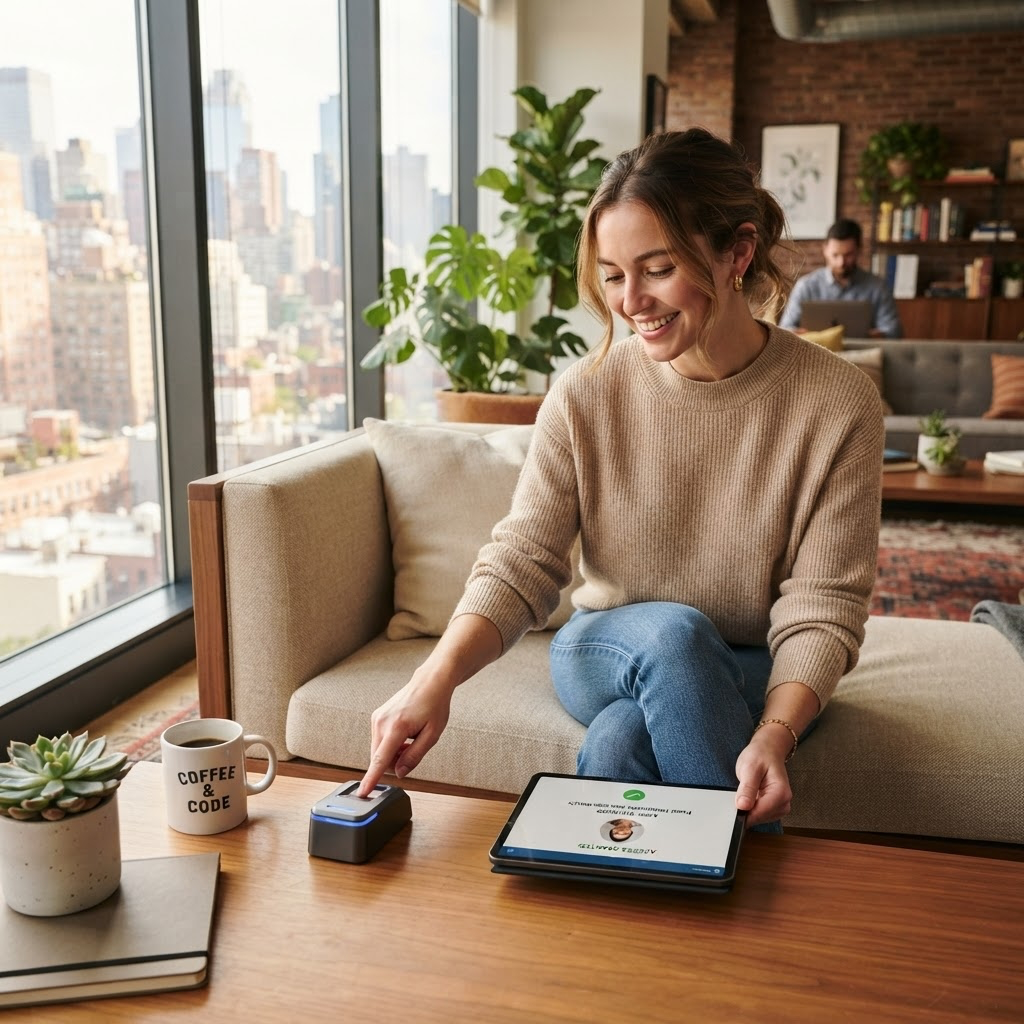
Over the last couple of years, we have learnt a lot about implementing multi-factor authentication (MFA) to strengthen the authentication process. Our identities on productivity apps, social media, email, banking apps and work environments requires strong verification. More so in a world we work, dialogue and collaborate primarily on the internet. What methods of authentication are available and why should you consider biometrics as a second form of authentication?
What is biometric authentication?
Biometric security involves using physical or behavioral characteristics unique to an individual to verify their identity. Common biometric types include fingerprints, facial recognition, iris scans, voice recognition, and behavioral patterns like typing speed or pace. Combining biometrics with passwords or tokens provides a strong multi-factor authentication (MFA) process. This can be relied upon to ensure that identities which gain access to systems and services have been thoroughly verified.

WEBROOT
How biometrics enhance the multi-factor authentication process
Using biometrics as part of the authentication process enhances security because they are almost impossible to duplicate or steal. When compared to other forms of authentication such as pins, passwords or tokens, biometrics reduce reliance on fixed credentials which are prone to phishing, brute-force and dictionary attacks. Another advantage of biometrics is, it does not require the need to remember passwords and pins or carry tokens around. Using biometrics as a second form of verification provides a higher level of assurance. Your identity is less likely to be taken over by an imposter. Additionally, biometrics offer a seamless user-friendly access to systems and devices when compared to other verification methods.
Whats more, using biometrics as a second form of authentication balances user convenience with security. This makes it appropriate for various types of access control systems such as doors, computers, mobile applications, productivity apps, email and social media accounts.

Overcoming biometric security challenges
As with every other thing, there are challenges like privacy concerns, system failures and verification inconsistencies. These can be overcome by implementing appropriate administrative controls like policies, procedures, regulations, and effective user awareness training programs. To guarantee sustainability and accuracy, it is best to invest in biometric devices that are reputable and less prone to erros.
When deciding whether to choose a biometric factor as a second form of authentication or not, it is always important to weigh the benefits of biometric systems against other forms of authentication. Evaluate user experiences, reviews and case studies of similar biometric devices. Assess their level of risk, breach or exploited. You will find the benefits of biometric authentication far outweighs the cost of its implementation and that its far advantageous than other forms of authentication.
Implement Biometrics with peace of mind
Identity and access controls systems is the new security boundary in this digital world. Whether you are accessing personal data or corporate devices, a strong access control system is needed to ensure an efficient and reliable verification process. Thus, strong biometric authentication ensures legitimate user identities and reduces the risk validating falsified identities. Therefore, implement biometrics as a second form of authentication. It provides greater reliability, assurance of user identities, strengthens the authentication process and enforces good cyber hygiene.

This article contains affiliate links. If you make a purchase, I may earn a commission at no extra cost to you.